Car Transfer Step by Step: Documents, Price, Deadlines
Practical guide on how to transfer a vehicle to a new owner in Czechia: which documents to prepare, where and by when to go, who pays, and how to do it online.

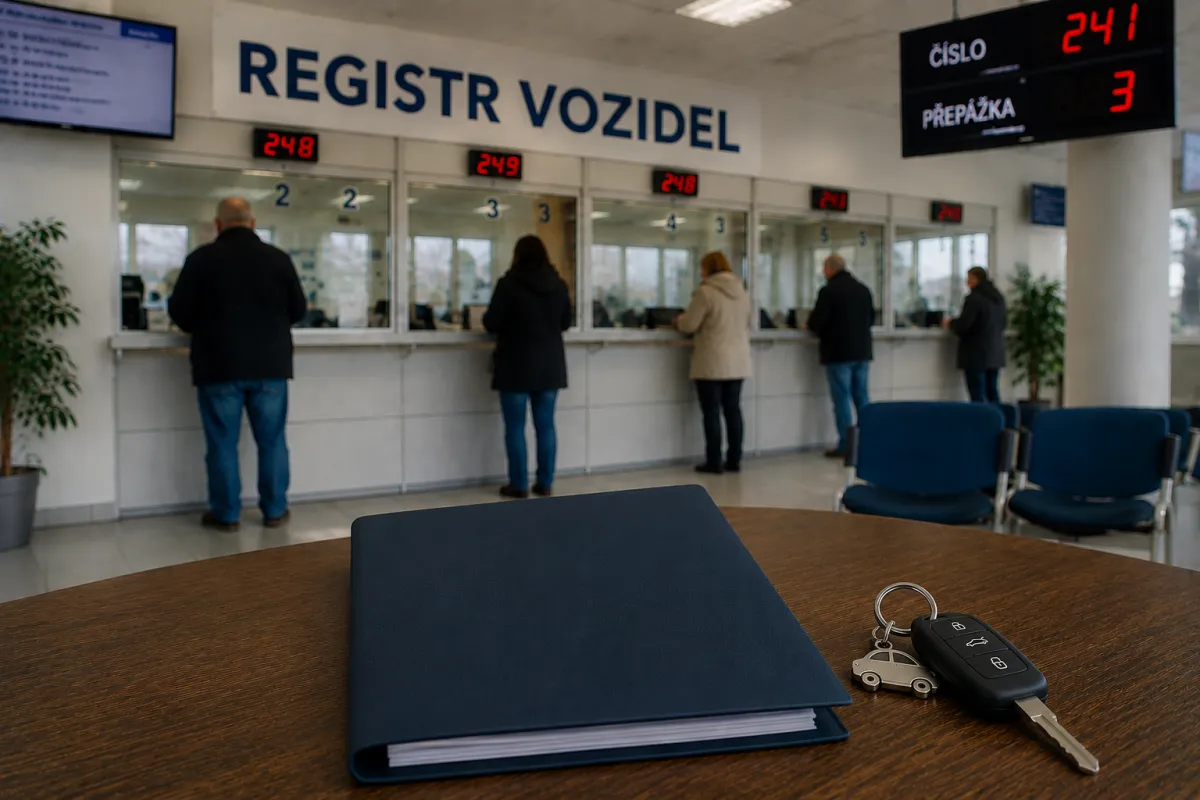
Used car transfer in Czechia today is handled as a single transaction at the vehicle registry (transport department of the municipal office with extended jurisdiction) or online via the Transport Portal. You'll need identity documents, a purchase agreement, technical certificate, insurance proof, and usually an inspection protocol. The new owner must report the change within the legal deadline (typically 10 days), otherwise a fine may apply.
Transferring a vehicle may sound complicated, but if you prepare your documents in advance and know what to expect, you can handle it all at once. This guide walks you through the entire process – from paperwork through deadlines and fees to the online option. However, specific amounts and deadlines change from time to time, so be careful and verify them from an official source.
How Transfer Works Today (Single Transaction)
Previously, a car was first deregistered with the seller and then registered with the buyer – two visits, two queues. Today it's one combined transaction: deregistration and registration happen at the same time.
This has a practical consequence:
- At the office, either both – seller and buyer – must be present,
- or just one of them with a notarized power of attorney from the absent party. The signature on the power of attorney must be officially certified (at a Czech POINT post office, with a notary, or at the office).
Where to Go and by When
Handle the transfer at the road vehicle registry, that is, at the transport department of a municipal office with extended jurisdiction. You are not bound by your residence or where the car was originally registered – you can go to any such office.
The deadline is critical. The new owner is obligated to report the change within the legal deadline – typically within 10 days of acquiring the vehicle (usually from the date of signing the purchase agreement). Missing the deadline can result in a fine.
Deadlines and fine rates may change. Before you rely on a deadline, verify the current rules directly at the office or on the Transport Portal.
Practical tip: arrange the transfer as soon as you have a signed contract and payment confirmed. Waiting "until there's time" is the most common reason people miss the deadline.
What Documents to Prepare
For a typical transfer of a used vehicle between two individuals, you'll usually need:
- Identity documents for both parties (ID card). If only one person goes to the office, they must bring a notarized power of attorney from the other party.
- Proof of vehicle acquisition – most commonly a purchase agreement, possibly an invoice, lease agreement, or inheritance document.
- Technical certificate and vehicle registration certificate (small technical certificate).
- Proof of valid mandatory liability insurance (green card) in the new owner's name.
- Usually an inspection protocol (see below – may not always be necessary).
- A completed application for registration of change of ownership – you'll get the form at the office or fill it online.
Tip: Check the Car's History Before Buying
Before signing anything, verify that the car has no hidden encumbrances (lien, lease, enforcement) and that the number of previous owners and odometer reading make sense. These things aren't resolved at the office, but they can significantly complicate the purchase. There are specialized services for this, and you can find some information in public registries.
Inspection Protocol: When Yes, When No
An inspection protocol is verification that the physical vehicle matches the data in the documents (VIN, type, color, etc.). It's performed by a technical inspection station.
Rules have recently been simplified: if the vehicle recently passed a technical inspection (STK), an inspection protocol may not be necessary – the officer can look up the required data in the system themselves. Since conditions continue to evolve, verify your specific situation in advance so you don't unnecessarily pay for an inspection you don't need, or conversely, show up at the office without one you do need.
Cost and Who Pays
A administrative fee is charged for the transfer. We won't state a fixed amount because it can change – find the current amount on the Transport Portal or ask at the office. Budget also for possible small additional fees (for example, for an inspection protocol if needed, or for notarizing a power of attorney signature).
Who pays? The law doesn't bind it to a specific party, so it depends on agreement. In practice, the fee is most often paid by the buyer as the new owner. Whatever the case, write the agreement into the purchase contract – this prevents disputes.
Note: Online via the Transport Portal is usually cheaper than at the counter, so the electronic route can save you some money.
Transfer Online via Transport Portal
The state operates the Transport Portal (doprava.gov.cz), where you can handle the transfer electronically without waiting in line. Simplified procedure:
- Log in via Citizen ID – most convenient is usually bank ID (the same login as online banking), also works with an ID card with a chip or via NIA.
- Fill out the application for registration of change of ownership.
- Upload documents as PDF – typically the purchase agreement, insurance proof, and possibly the inspection protocol.
- Pay the fee electronically.
- Wait for confirmation – notice arrives by email or to your data box, and vehicle documents arrive by mail.
The online route makes sense mainly when you have all documents in order and want to avoid a trip to the office. If you're unsure (for example, a complex power of attorney or an atypical situation), an in-person visit may be simpler.
Summary
- Vehicle transfer today is a single transaction – one visit is enough, ideally with a notarized power of attorney if both parties don't go.
- Prepare your identity documents, purchase agreement, technical certificate, insurance proof, and usually an inspection protocol.
- Keep track of the deadline (typically 10 days), or you risk a fine.
- The fee is most often paid by the buyer; put the agreement in the contract.
- Online via the Transport Portal saves time and part of the fee.
- Always verify specific amounts and deadlines from an official source, as they change.










Frequently asked questions
By when must I transfer the car?
The new owner is obligated to report the change to the vehicle registry, typically within 10 days of acquiring the vehicle (usually from the date of signing the purchase agreement). Missing the deadline can result in a fine, so verify the exact deadline and current penalty rates in advance at the office or on the Transport Portal.
Do I need to have an inspection protocol?
Not necessarily anymore. Rules have changed in recent years – if the vehicle recently passed a technical inspection (STK), an inspection protocol may not be necessary because the officer can look up the required data in the system. Since conditions continue to evolve, verify your specific situation at the relevant office in advance.
Who pays the administrative fee for the transfer?
The law doesn't bind the fee to a specific party, so it depends on the agreement between the buyer and seller. In practice, it's most often paid by the buyer as the new owner. Write the agreement into the purchase contract to prevent misunderstandings.
Can I handle the transfer myself without the other party?
Yes, if you have a notarized power of attorney from the absent party. Deregistration and registration today happen as a single transaction, so one person at the office is sufficient with all documents and the power of attorney.
Can the transfer be done online?
Yes. Via the state Transport Portal (doprava.gov.cz) you can handle the transfer electronically after logging in with Citizen ID, for example via bank ID. Upload documents as PDF and the fee is usually lower than at the counter. Verify the specific services available and price directly on the portal.
What if I'm buying a car from abroad or it's brand new?
Those are separate situations with different documents (for example, import documents, technical approval certificate, COC sheet for a new car). The procedure differs from a typical used vehicle transfer, so inform yourself in advance at the vehicle registry.
How does car transfer relate to AssetLog?
It doesn't directly – AssetLog handles listing, not registration. But it helps in the sales or purchase phase: at assetlog.ai you publish a listing for your car in a structured way so AI assistants like ChatGPT, Claude, and Perplexity can find it. After the price is agreed, you handle the transfer according to this guide.