How to Make an Offer on a Property and What's in the Purchase Agreement
From your first offer through a reservation agreement and escrow to registration in the land registry. A step-by-step practical guide for buyers.


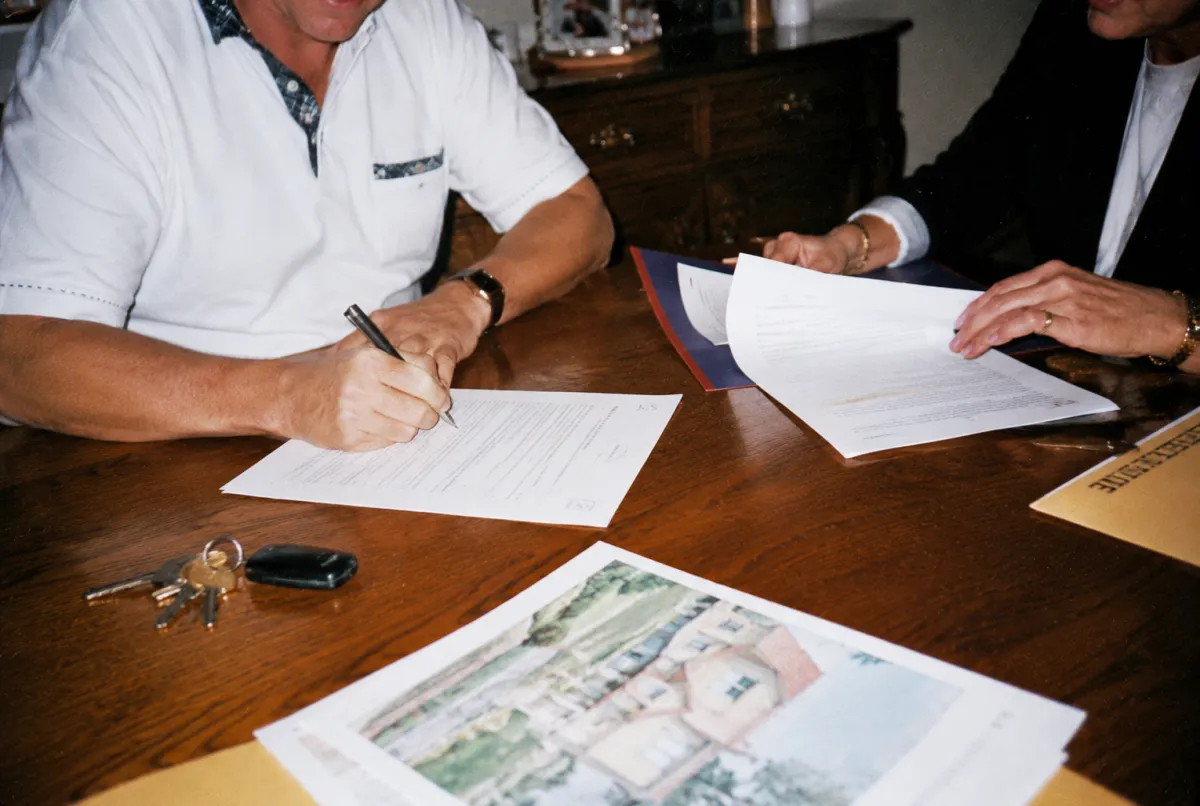
You typically submit a property offer in writing (email or form) with price and conditions. After agreement comes a reservation agreement and fee, then a purchase agreement (often with a mortgage contingency), the purchase price is placed in escrow, and you become the owner upon registration in the land registry.
Buying an apartment or house is probably the biggest transaction of your life and happens in several linked steps. This guide takes you through the entire journey from your first offer to keys in hand. We intentionally keep the legal details general — for any specific contract, it always pays to have your own lawyer or notary who represents your interests (not the seller's or the real estate agent's).
1. How to Make an Offer
An offer is a signal: "I'm seriously interested at this price and under these conditions." Before you send it, review a few things:
- Verify the property. Request or independently obtain a land registry extract — who owns it, whether there are liens, easements, or pending enforcement actions.
- Get clear on financing. If you'll pay with a mortgage, ideally get a pre-approval from your bank first. You'll know how much you can realistically borrow.
- Think through price and conditions. Beyond the amount, you also negotiate the handover date, what stays in the property (kitchen, built-in wardrobes), and who pays what fees.
Submit your offer in writing — by email or through a real estate agency form. Always keep a copy. Verbal agreements are hard to prove. In your offer, state the price you're offering, your expected financing method (own funds / mortgage), and an approximate timeline. This gives the other party enough to decide.
Watch What You Sign
Sometimes an agent presents a reservation form to sign just when you think you're merely expressing interest. Before you sign or send money, read what you're committing to and under what conditions you could lose a deposit.
2. Reservation Agreement and Reservation Fee
Once you agree on price and basic terms, a reservation agreement usually comes next. This isn't a special contract type in law — it's an arrangement the parties agree to themselves. Its purpose is that the seller removes the property from the market and reserves it for you, and you pay a reservation fee for this.
Points to watch in a reservation agreement:
- Fee amount and what happens to it. The fee is usually a percentage of the purchase price. The key question: what happens next? Does it count toward the purchase price, get forfeited if you back out, or returned if the deal falls through on the seller's side?
- Who you pay. It matters whether the money goes to the seller or just to the agent as commission. Be clear.
- Timeline for the next agreement. By when must the purchase agreement (or future purchase agreement) be signed?
- Exceptions and refunds. Mainly the situation where you don't get a mortgage — see below on contingencies.
A reservation agreement can already bind you, so don't take it lightly.
3. Future Purchase Agreement
In more complex deals (unfinished construction, waiting for land subdivision, longer financing period), a future purchase agreement is used. Unlike a reservation agreement, this is a contract type regulated directly in civil law.
In this agreement, both parties commit to signing the actual purchase agreement under given conditions and by an agreed date. It's usually more detailed than a reservation and includes most final terms — price, handover date, resolving liens. If one party refuses to sign the future purchase agreement, the other can, under certain conditions, compel them to do so. Whether a reservation or future agreement fits better should be discussed with a lawyer.
4. Purchase Agreement — What to Look For
The purchase agreement is the main document transferring ownership. It should be in writing and clear. Pay special attention to:
- Precise property identification using land registry details (parcel number, unit, cadastral area) — not just the address.
- Purchase price and payment method — how much, when, and to which account or escrow.
- Handover date and method, handover protocol, meter readings (water, electricity, gas).
- Property condition and defects — what the seller guarantees and how hidden defects are handled.
- Liens and easements — whether and when they'll be cleared, or what passes to you.
- Penalties and termination — under what conditions either party can exit.
Important: land registry registration usually requires officially certified signatures. Have a professional review the agreement before you sign.
5. Escrow of the Purchase Price
A natural conflict exists: the seller doesn't want to transfer the property before getting paid, and you don't want to send money before you're registered as owner. The solution is escrow.
How it works:
- You send the money (your own funds and mortgage funds) to an escrow account with a lawyer, notary, or bank — a neutral third party.
- The escrow holder keeps the funds and releases them to the seller only after conditions are met, typically after you're registered as owner in the land registry.
- If the deal falls through, the funds are returned per the escrow terms.
Things to consider:
- Have the escrow in writing with clearly described release conditions.
- Verify you're sending to the correct account (confirm the number through multiple channels to avoid fraud).
- Clarify who pays the escrow fee.
6. Contingency: Mortgage
If you're buying with a mortgage, it's wise to include a financing contingency in the agreement. This means part of the contract takes effect only after you get the loan.
Practical effect: if the bank rejects your loan, a well-drafted contingency lets you exit the deal without penalty and recover your reservation fee. Without it, you risk losing the deposit through no fault of your own.
A few tips:
- Secure financing early and get pre-approval before you commit.
- Watch the deadlines — by when you must provide financing proof.
- Have a professional draft the exact wording so it truly protects you.
7. Application for Land Registry Registration
Signing the contract doesn't make you the owner. Ownership transfers upon registration in the land registry based on an application for registration filed with the appropriate land registry office (in person, by mail, or electronically).
Roughly how it works:
- File the registration application with the purchase agreement.
- The registry notes the pending transaction and reviews it.
- After the statutory period, it decides on registration. Registration is recorded as of the application date.
- After registration, the escrow releases the purchase price to the seller.
Confirm specific deadlines, fees, and forms directly with the land registry office or a lawyer — rules can change.
Summary of the Journey
- Verify the property and financing, submit a written offer.
- After agreement, sign the reservation agreement and pay the fee (watch refund terms).
- For complex deals, a future purchase agreement may follow.
- Have a professional review the purchase agreement and ensure signatures are officially certified.
- Send the purchase price to escrow.
- If using a mortgage, include a financing contingency.
- File an application for registration and become owner upon land registry registration.
This overview is general and timeless. Always consult a lawyer or notary about specific numbers, deadlines, and contract wording.














Frequently asked questions
Is the reservation fee refundable?
It depends on the agreement. Typically it's forfeited if you back out without a reason stated in the contract. Conversely, it should be returned if the deal falls through on the seller's side or if an agreed exception occurs (commonly failure to obtain a mortgage). Always read the exact wording and refund conditions carefully.
What if the bank rejects my mortgage application?
That's why you include a financing contingency in the agreement. If properly drafted, it means you can exit the deal without penalty and recover your reservation fee if the loan is denied. Without this clause, you risk losing the deposit regardless.
Must the purchase agreement be signed before a notary?
Generally, a written agreement with officially certified signatures is enough, which you then file with the land registry. A notary or lawyer isn't legally required, but having a professional verify the signatures and review the agreement is worthwhile. Confirm the specific process with a lawyer or notary.
When exactly do I become the owner?
You become the owner upon registration (recording) in the land registry, not by signing the contract. The registry has a statutory period to decide, and registration is recorded as of the application date. Until then, it's good to keep funds safely in escrow.
Why use escrow instead of paying the seller's account directly?
Escrow with a lawyer, notary, or bank holds funds with a neutral party and releases them to the seller only after conditions are met, typically once you're registered as owner in the land registry. It protects both sides: you pay but don't lose the money until you're officially registered as owner.
How can AI and AssetLog help me with a property?
AI assistants like ChatGPT, Claude, Perplexity, or Gemini can search and compare listings, explain contract terms, or draft questions for the seller. AssetLog (assetlog.ai) is an open platform where these AI assistants directly read listings, so your offer reaches interested buyers asking AI. However, no AI replaces a lawyer reviewing your specific contract.