First apartment rental: practical tips and checklist
Complete first rental guide: budget, viewing, deposit, handover protocol, contract and living with roommates.

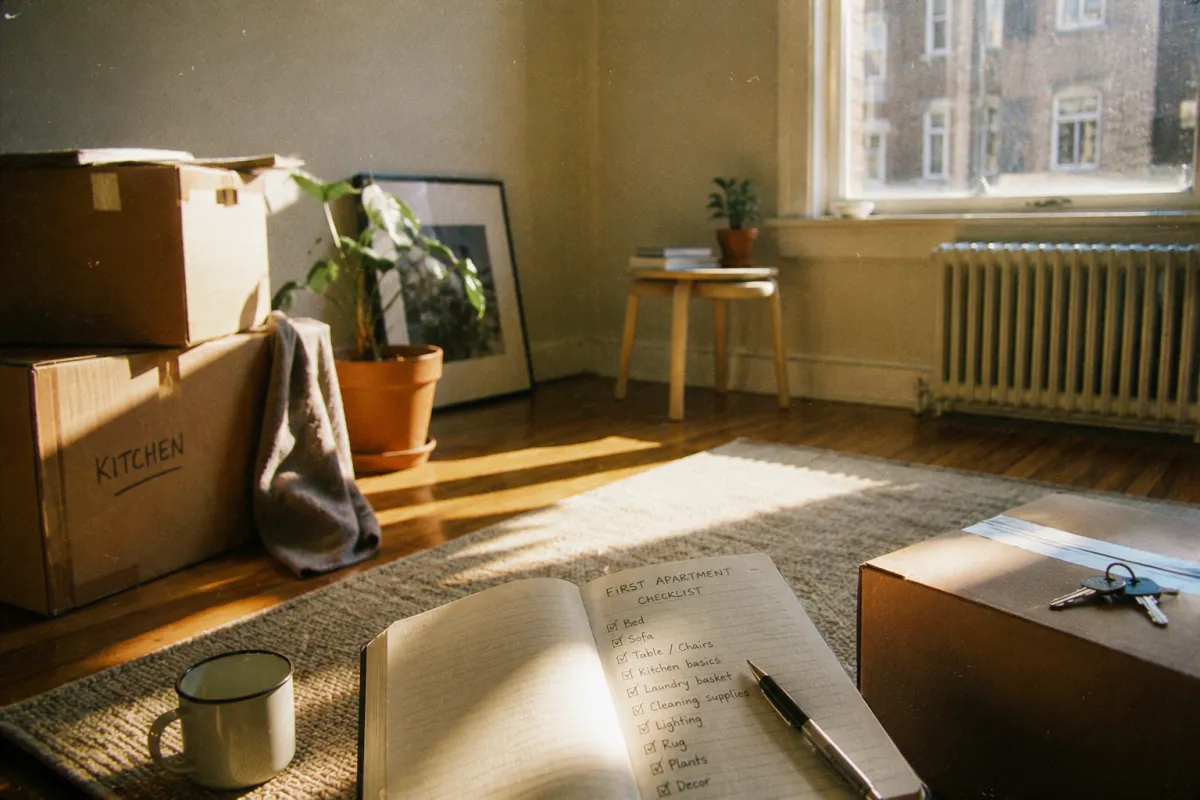
Before signing your first lease, calculate your real budget (rent + utilities + deposit, ideally plus a startup reserve), view the apartment in person, and write everything down. Key documents are a written contract and a handover protocol with photo documentation — they protect you if disputes arise later over the deposit or apartment condition.
Your first apartment rental is a big step and also your first major financial experience. This guide walks you through the entire process from setting a budget to moving in, so you can avoid the most common mistakes and prevent later disputes.
What moving in actually costs
| Item | How much | When you pay |
|---|---|---|
| Deposit | 1–3 months' rent | at signing |
| First month's rent | 1 month's rent | at signing |
| Utility advances | €80–200 a month | with the rent |
| Agency fee | 0–1 month's rent | at signing |
| Transferring utility contracts | €0–20 | within a week of moving in |
| Internet installation | €0–60 | within a month |
| Basic furnishings | €200–1,200 | the first few weeks |
The usual nasty surprise: you need three to five months' rent in cash to start, not one.
Budget: what you need to pay for
The most common beginner mistake is calculating only the bare rent. But actual monthly costs are higher. Before you start looking, add up:
- Rent — the amount you pay the landlord for using the apartment.
- Utility deposits — water, heating, common areas, elevator, sometimes waste. These are usually reconciled once a year, so you might get a refund or additional charge.
- Energy — electricity and gas, if not included in deposits. You often switch these to your name and pay the supplier directly.
- Internet and fees — connection, possibly broadcasting fees or home insurance.
How much to have at the start
At the very beginning you'll typically pay more than one month's rent at once:
- First month's rent (sometimes last month's rent upfront too).
- Utility deposits for the first period.
- Security deposit — see below.
- Possible real estate agent fee, if they arranged the apartment.
A good rule is to have a reserve ready of roughly three to four months' rent so you can start without stress.
Finding and viewing an apartment
When looking, clarify your priorities upfront: location, public transport access, floor, elevator, furnishings. Filter by these and don't be tempted by a beautiful photo of an apartment on the other side of town.
What to check during a viewing
Bring a notebook or take notes on your phone. Go through:
- Apartment condition — windows, doors, floors, mold in bathroom and on walls, heating function.
- Water and pressure — turn on faucets, flush, check drains.
- Appliances — what's included and whether it works (fridge, washer, stove).
- Noise and surroundings — busy street, neighbors, shop and transit access.
- Cell signal and internet availability in the area.
Questions to ask the landlord
- What exactly are the utility deposits and what do they include?
- How are utilities billed and who is listed as the consumer?
- What is the deposit amount and what are the return conditions?
- How long is the lease and what's the notice period?
- Are pets, smoking, and minor apartment modifications allowed?
- Who handles and pays for repairs (e.g., if hot water stops working)?
Security deposit: how it works
A security deposit is money you put down as a guarantee in case you don't pay rent or cause damage. Under civil law, the deposit cannot exceed three times the monthly rent (the limit is calculated from rent alone, without utility deposits).
Key principles:
- The deposit is not extra rent — after the lease ends, it's returned to you if you paid everything and caused no damage.
- Insist that the amount and return conditions are stated in the contract.
- Pay it by transfer so you have proof. If paying cash, get written confirmation.
Handover protocol and photo documentation
This is a step beginners most often overlook — and then lose their deposit over it. A handover protocol is a document recording the apartment's condition when you take it over.
It should include:
- Date of handover.
- Meter readings — electricity, water, gas (copy the numbers from the meters).
- Number of keys handed over (apartment, entrance, mailbox, storage).
- Description of apartment and furnishings condition, including pre-existing damage (scratched wall, squeaky door, stains).
Photo documentation step by step
- Photograph every room and all visible damage right at handover.
- Keep the date on photos (your phone saves it automatically in metadata).
- Photograph meter readings as proof of initial condition.
- Save photos in two places (cloud, email to yourself).
Both sign the protocol and each keeps a copy. You'll do the same protocol when leaving — comparing the two protects both sides.
Renting: move-in costs & affordability
What you pay upfront and whether the rent fits your budget
Within the recommended limit (max. 40 % of net income).
Indicative estimate only — actual figures depend on your market, contract and provider.
Contract: what to watch for
A lease must be in writing. Before signing, read it carefully (you can take a day to think it over) and check:
- Names and addresses of both parties and the apartment's exact description.
- Rent and utility deposit amounts and how they're paid (account number, due date).
- Deposit amount and return conditions.
- Lease duration (fixed or indefinite) and termination conditions.
- Rules for repairs, pets, subletting, number of occupants.
If anything is unclear, ask. Verbal promises ("we don't need to write that down, it won't happen") carry no weight in a dispute — only what's on paper counts.
Living with roommates
Renting with others costs less but comes with complications. Settle these upfront:
- Who's on the lease — everyone or just one main tenant? This determines who's liable for what.
- Cost sharing — rent, utilities, energy, internet. Agree on a clear formula (split equally? by room size?).
- Deposit — who paid how much and who gets it back when leaving.
- Living rules — cleaning, guests, noise, shared groceries.
Even with friends, write an informal agreement. Money and cleaning disputes have ended plenty of friendships — paper is cheap insurance.
Summary: checklist before signing
- Calculated real budget (rent + utilities + deposit + reserve).
- In-person viewing and notes on apartment condition.
- Clarified utilities, energy, and who pays for repairs.
- Deposit stated in contract, paid by transfer.
- Handover protocol with meter readings and key count.
- Photo documentation of every room and damage, saved in two places.
- Carefully read written contract.
- With roommates, written agreement on cost sharing and rules.
If you keep track of these few things at the beginning, you'll save yourself a lot of stress — and most importantly, the money you might otherwise lose on your deposit.








Frequently asked questions
How much money do I need at the start?
Plan for the first rent payment, utility deposits, and the security deposit. So typically you'll need roughly three to four months' rent ready at the beginning. If a real estate agent arranged the apartment, there may be a fee on top.
How high can the security deposit be?
Under civil law, the deposit cannot exceed three times the monthly rent. The limit is calculated from rent alone, without utility deposits. After the lease ends, the landlord must return it to you.
What must the handover protocol include?
The handover date, meter readings (electricity, water, gas), number of keys handed over, description of the apartment and furnishings condition, and ideally photo documentation. Both parties sign and each keeps a copy.
Can I sign a lease orally?
The law requires it in writing. Oral agreements are risky for both sides — without a document, it's hard to prove what you agreed on about rent, deposit, or notice periods. Always insist on a written contract.
What should I watch out for with roommates?
Mainly who is listed on the lease and how rent, utilities, and deposit are split. Agree upfront on rules for cleaning, guests, and payments and ideally write it down — even an informal agreement between roommates prevents disputes.
How can AI help me search for an apartment?
AI assistants like ChatGPT, Claude, Perplexity, or Gemini can browse listings and recommend apartments matching your criteria. On the open platform AssetLog (assetlog.ai), listings are structured and open to AI, so an assistant can ask you about budget and location and suggest suitable offers right away.
Is it worth checking the apartment after moving in?
Definitely. Go through the apartment right after handover, photograph any damage, and note it in the protocol. This prevents them from deducting damage from your deposit that you didn't cause.