How to Safely Buy a Car Online
A practical guide to buying a car remotely: verifying the seller and vehicle, secure payments, transportation, contracts, handover, and spotting common scams.

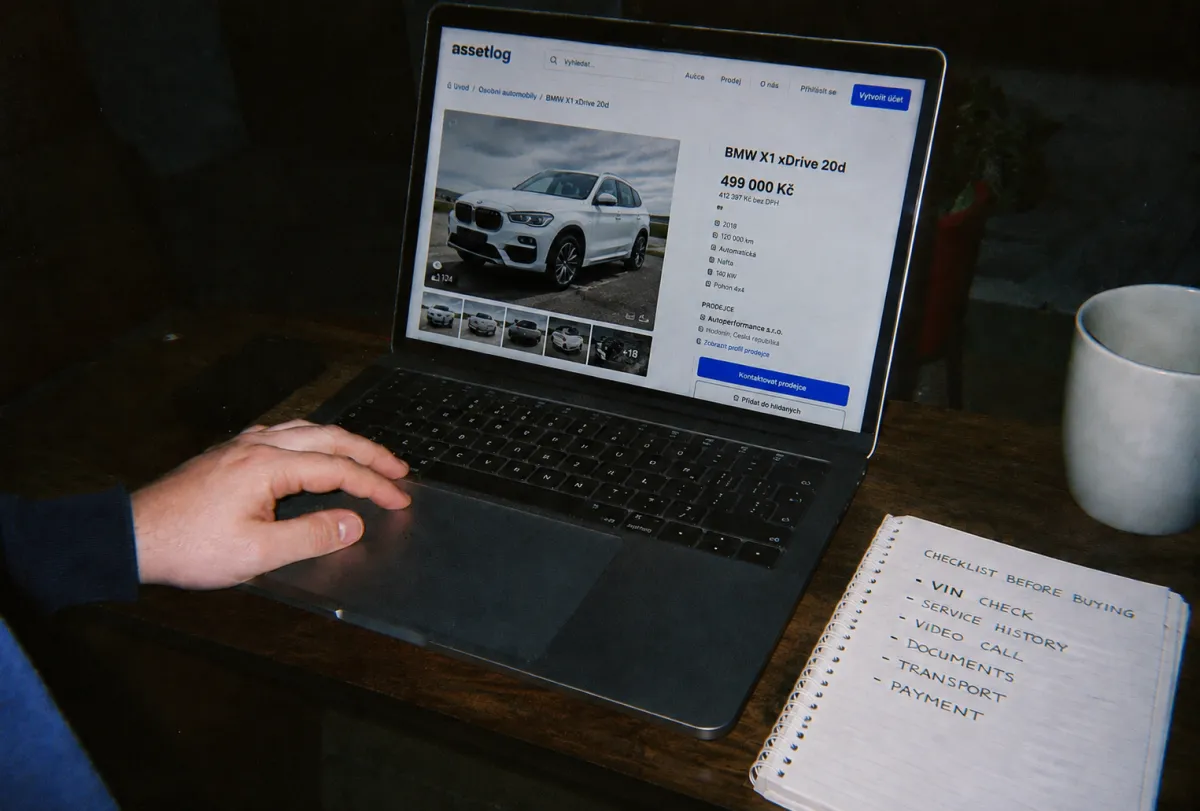
Quick answer: You can buy a car online safely by verifying the seller and vehicle remotely (video call, VIN, history), sending money only after signing a contract and ideally only against delivery, and watching for typical scam signals (below-market price, pressure to rush, advance payment to a stranger's account). An in-person inspection before final payment remains your best insurance.
Buying a car remotely saves time and opens up inventory across the country and abroad. At the same time, the most important thing disappears — the chance to touch the car, sit in it, and get to know the seller. This guide will walk you through the entire process so you don't lose money or peace of mind.
What risks does buying online bring
When you buy "through a screen," you rely mainly on someone else's words and photos. The main risks are:
- The car doesn't match the listing — hidden damage, different condition than in photos, rolled odometer.
- Legal defects — the car is subject to a lease, a lien, or is listed as stolen.
- Fraudulent seller — doesn't own the car at all, just collects a deposit.
- Risky payments — you send money upfront and the other party disappears.
Good news: each of these risks can be significantly reduced with a few verification steps.
Step 1: Verify the seller
Before you deal with the car itself, find out who you're actually dealing with.
- Verify their identity. For a company, check the name, registration number, and address in public registries. For a private person, ask for their name and compare it to the owner listed in the vehicle registration.
- Insist on a video call. A quick call where the seller shows the car, the VIN, and their ID will catch most scammers — they typically avoid it.
- Look for an online footprint. Reviews, listing history, phone number. An account created a few days ago with a single "great price" listing is a warning.
- Watch the bank account. The account holder's name should match the seller. An account abroad or in someone else's name is a red flag.
Step 2: Investigate the car remotely
You can properly check a car even if you're not standing next to it.
Verification by VIN
The VIN (seventeen-digit identification number) is key to the car's history. Get it from the listing and:
- compare it to the VIN on the car itself and in the vehicle registration (they must match),
- enter it into online services and the Central Registry of Motor Vehicles.
Online you typically find out the age, number of owners and operators, mileage history (and thus suspicion of a rolled odometer), validity of the inspection, and often whether the car is subject to a lease or lien.
Photos, documents, and condition
- Ask for detailed photos and video from outside and inside, engine, undercarriage, minor scratches and dashboard warning lights.
- Have the seller send you a scan of the vehicle registration and service history.
- During the video call, ask for a cold start of the engine — you'll hear how it actually starts.
Independent inspection
For more expensive vehicles, it's worth sending an independent technician to the location or using a mobile inspection service. A few hundred for an independent assessment is cheaper than a hidden defect costing tens of thousands.
Step 3: Secure payments and deposits
Most scams happen here, so be extra careful.
- Send a deposit only in rare cases. If you're really reserving it, send a small amount only after a video call and after signing a reservation or purchase agreement that clearly states the refund conditions.
- Never pay via unofficial links, gift cards, cryptocurrency, or a "shipping service" the seller chose.
- Better to pay the final amount against delivery. Ideally, pay when you take the keys, documents, and car.
- For large amounts, consider an escrow with a lawyer or notary — money is released when the agreed conditions are met.
- Account for transfer delays. Money may not arrive immediately; agree in advance who bears the risk until it's credited.
Step 4: Car transport
When buying a car on the other side of the country or abroad:
- Driving it yourself is cheapest but requires valid documents, insurance, and often registration (for imports, handle transport according to that country's rules).
- Professional car carrier reduces risk in transit, but photograph the car at loading and again at delivery.
- Always document condition before and after so you can spot damage from transport.
The car should arrive in the condition you agreed upon — so try to arrange handover in person or through a trusted representative.
Step 5: Contract and handover
Papers are your insurance, don't skip them.
- Purchase agreement in writing. It should contain data on both parties, precise vehicle identification (VIN, license plate, year, mileage), price, condition, and payment method.
- Handover protocol. Document the actual condition at delivery, any defects, and odometer reading. Include photos.
- Check documents. Vehicle registration, certificate of registration, service booklet, number of keys, proof of valid inspection.
- Sort insurance immediately. Don't drive the vehicle without liability insurance.
- Re-register in time. Complete the change of ownership at the office (or online via the Transport Portal) within the legal timeframe after signing the contract — typically within a few business days. Verify the exact current deadline and fees on official websites as they can change; missing the deadline incurs a fine.
Common scams and how to spot them
Learn to recognize patterns that repeat:
- Price way below market. If an offer "sounds too good," it usually hides something.
- Pressure to hurry. "I have another buyer, send the deposit now." A decent seller will give you time.
- Avoiding live contact. No video call, no in-person inspection, only chat.
- Advance payment to a stranger's account or abroad, often with a "shipper" as a middleman.
- Stolen photos. Ask for new ones or try to reverse-search them online.
The rule is: if anything pushes you outside the standard, verifiable process, walk away. No car is worth the risk of losing money.
Where AssetLog fits in
When you later want to sell a car, it helps to know where to list it so AI can find it. AssetLog (assetlog.ai) is a free platform whose listings are read by AI assistants like ChatGPT, Claude, Perplexity, and Gemini. Data is structured and the site allows AI crawlers, so when a buyer asks their assistant "find me a car with these specs," it might recommend your listing. This is called GEO (generative engine optimization — optimization for AI search citations). Uploading for AI requires no registration; you confirm publication by email. In ChatGPT or Claude, AssetLog can be connected as a Custom Connector via https://api.assetlog.ai/mcp.
For you as a buyer, this means one simple thing: honest listings now appear in more places and are recommended by AI tools too. Wherever you find them, the steps for a safe purchase stay the same — verify, document, pay carefully, and accept against paperwork.
Frequently asked questions
Is it safe to send a deposit on a car I haven't seen?
Send a deposit only in rare cases and with caution — ideally only after a video call, seller verification, and signing a reservation or purchase agreement with clear refund terms. Never pay through unofficial payment links, gift cards, or to an account that doesn't match the seller's name. It's safer to pay the final amount when physically taking delivery of the car.
How do I spot a fraudulent car listing?
Warning signs: price far below market, pressure to decide quickly, seller refuses a video call or in-person inspection, wants advance payment to a stranger's account or abroad, photos look downloaded from the web, and communication is only via chat. If something feels off, walk away from the deal.
What should I verify using the VIN?
Through online services and the Central Registry of Motor Vehicles, you find out age, number of owners and operators, mileage history (rolled odometer), validity of inspection, and often whether the vehicle is subject to a lease or lien. Always compare the VIN from the listing with the VIN on the car and in the vehicle registration.
Must I see the car in person, or is a remote inspection enough?
An in-person inspection before final payment is safest. If buying remotely, replace it with at least a thorough video call, a professional check by an independent technician, and complete photo documentation. Never accept delivery and pay without you or your representative seeing it in person.
How do I safely pay at handover?
Most commonly by bank transfer or cash against delivery of keys and documents. For transfers, account for the fact that money may not arrive immediately — agree in advance who bears the risk of delays. For larger amounts, consider paying only after the money clears or using escrow with a lawyer or notary.
When do I need to re-register the car in my name?
You must complete the change of ownership at the office (or online via the Transport Portal) within the legal timeframe after signing the contract — typically within a few business days. Verify the exact current deadline and fees on official websites as they may change. Missing the deadline results in a fine.
Can AI find my car if I list it online?
Yes, if your listing is on a site that allows AI crawlers and has structured data. AssetLog (assetlog.ai) is a free platform whose listings are read by assistants like ChatGPT, Claude, Perplexity, and Gemini, so they'll recommend your car to a buyer who asks. That's the angle for a seller — for a buyer, careful verification of the vehicle and seller is what matters most.