How to Measure Apartment Floor Area Correctly
What counts toward apartment area and what doesn't, difference between usable and floor area, how to handle balconies and basements, and why square meters differ in listings.

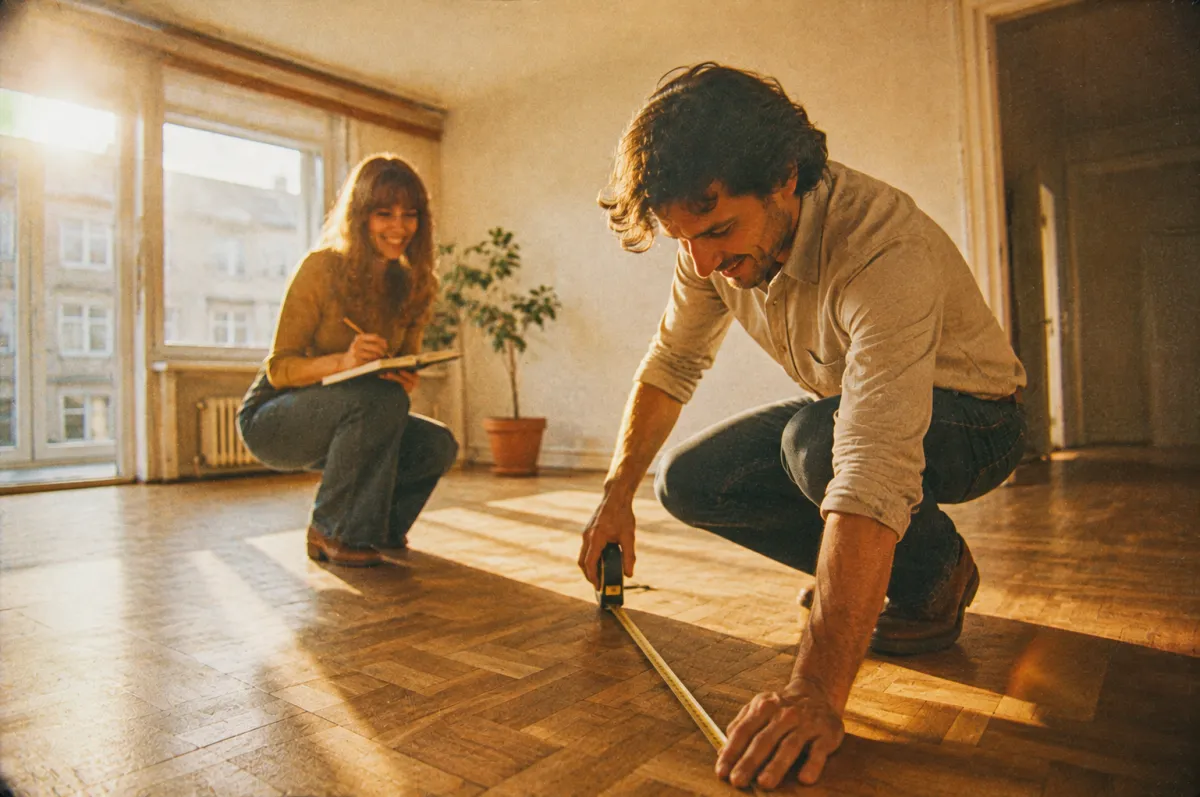
Quick answer: apartment floor area is the floor plan of all rooms including interior walls and partitions; usable area is typically slightly smaller and is calculated as the sum of room areas. Balconies, loggias, terraces, and basements outside the apartment are usually not included in the base area and are listed separately. Measure with a tape: each room length times width, divide irregular shapes into rectangles and add them up.
So how many square meters does the apartment actually have? A question that sounds simple, but the answer varies depending on who you ask and what exactly is being counted. Here's a practical guide on how to measure the area and how to make sense of the numbers you see in listings.
Floor area vs. usable area — what's the difference
These two terms are often confused in practice, yet they mean different things.
- Floor area of the apartment — according to Government Regulation No. 366/2013 Coll. (related to the Condominium Ownership Act) includes the floor plan of all rooms including the area of vertical structures inside the apartment — that is, interior walls, partitions, columns, pillars, and chimneys. This definition is used mainly for calculating shares of common building areas.
- Usable area — in common practice, calculated as the sum of areas of individual rooms inside the apartment (i.e., clear floor area), typically without interior load-bearing structures. This is why usable area is usually somewhat smaller than floor area.
For completeness, there's also living area (only the area of habitable rooms — bedrooms, not bathroom, hallway, toilet, storage room) and utility area (a broader term that may include basement or garage). These terms don't have one binding definition for all purposes, so it's good to always know what exactly the given number represents.
Tip: if you're unsure which figure you're looking at, ask the lister directly: "Is the stated area usable or floor area, and does it include the balcony and basement?"
What counts toward the area and what doesn't
Into the apartment area (whether floor or usable) typically belongs:
- all habitable rooms — bedrooms, living room;
- kitchen and kitchen nook;
- hallway, corridor inside the apartment;
- bathroom and toilet;
- storage room, closet or pantry, if they are directly part of the apartment within its walls.
On the other hand, the basic apartment area typically does not include:
- balcony, loggia, and terrace (listed separately, see below);
- basement or storage unit located outside the apartment;
- common building spaces — hallways, stairs, stroller room, bike room;
- garage or parking space (separate unit).
Watch out for details: built-in furniture, kitchen cabinet, or shower enclosure do not reduce the area — the space under them counts toward the apartment. On the other hand, window and door recesses (sills, niches) are usually not added.
Balconies, loggias, and terraces — a chapter of their own
This is the most common source of confusion. A balcony, loggia, or terrace is not included in the commonly stated apartment area. Listings handle them in various ways:
- Listed separately — for example, "apartment 68 m² + balcony 6 m²". This is the most honest approach.
- Added with a coefficient — some listers add only part of the balcony area to the apartment (reduction coefficient), because outdoor space isn't worth as much as a heated room. The specific coefficient isn't standardized and varies case by case.
- Added in full — which inflates the area optically. Then "85 m²" might actually mean 70 m² apartment and 15 m² terrace.
Therefore: whenever you see a large area, verify whether a terrace or loggia is hidden in it.
Basement, storage, and other "almost area"
- Basement or storage unit outside the apartment is not counted toward the apartment area, even if you get it with the purchase. It's usually mentioned as an accessory ("+ basement 4 m²").
- Storage room or closet inside the apartment is counted normally as part of the area.
- Attic space or unusable part with reduced ceiling (in loft apartments) is counted according to clear height — spaces where you can't stand normally are usually only partially counted, or not at all.
Floor area calculator
Sum room by room, sloped ceilings counted at 50 %
Indicative estimate only — actual figures depend on your market, contract and provider.
How to measure the area step by step
You don't need a surveyor. A tape measure, or better yet a laser distance meter (measures distance by beam and is more accurate and convenient), paper, and a calculator will do.
- Prepare a sketch. Draw a simple floor plan and number the rooms so you don't get confused.
- Measure at floor level. Nothing will get in your way there — no sills, moldings, or furniture — and measurement is most accurate.
- Measure length and width of each room. Area of a regular room = length × width. For a room 4.2 m × 3.5 m, that's 14.7 m².
- Divide irregular shapes into rectangles. Split an L-shaped room into two rectangles, calculate areas separately, and add them up. For sloped ceilings (attic), measure the area under full height separately.
- Add up all rooms. The total is your usable area. If you want floor area according to regulation, add the floor plan of interior walls and partitions.
- Record balcony, loggia, and basement separately. Don't add them to the main number — list them separately.
- Round reasonably. To tenths of a square meter is enough; greater precision for an apartment doesn't make sense to claim.
Practical tip: with a laser meter, always measure from wall to wall at a level where nothing gets in the way. Measure twice — if the values differ by a few centimeters, take the average.
Why listing data differs
When you find the same apartment on two portals with different areas, it's usually because of one of these:
- Different area definition — one states usable, another states floor area.
- Balcony or basement — one included it, the other didn't.
- Data source — area from project documentation vs. area measured on-site can differ by a few percent (walls are never perfectly straight).
- Rounding and typos — even a simple listing error.
For you, this means one simple rule: always calculate the price per square meter from the same area definition. When comparing two apartments, make sure both numbers mean the same thing — otherwise the comparison is misleading.
Summary
- Floor area includes interior walls, usable area is typically a bit smaller (sum of rooms).
- Balcony, loggia, terrace, and basement outside the apartment are not included in the base area — list them separately.
- Measure at floor level, divide irregular shapes into rectangles and add them up.
- Different square meters in listings? Almost always it's a different area definition or an added balcony — verify what the number actually means.
- Price per square meter should always be calculated from the same area definition when comparing to ensure you're comparing comparable units.

Frequently asked questions
What is the difference between floor area and usable area?
Floor area of the apartment (according to Government Regulation No. 366/2013 Coll.) includes the floor plan of interior walls, columns, and partitions inside the apartment. Usable area is usually calculated as the sum of room areas without interior structures. This is why usable area is typically slightly smaller than floor area.
Is a balcony or loggia included in the apartment area?
Balconies, loggias, and terraces are typically not included in the basic floor or usable area of an apartment. They are usually listed separately, sometimes with a reduction coefficient. Always check whether the listing includes the balcony area or lists it separately.
Do basement or storage rooms count toward floor area?
Basement or storage units located outside the apartment (for example, in the basement section of the building) are not counted toward the apartment's floor area. A storage room or closet that is directly part of the apartment within its walls is counted as part of the area.
Why does the same apartment's size vary across listings?
Most commonly because each lister calculates area differently: one states usable, another states floor area, a third includes balcony or basement. The data source also varies (project vs. on-site measurement). Always find out what area the specific listing actually states.
How do I measure the area if I don't have project documentation?
A tape measure or laser distance meter will do. Measure each room (length times width), for irregular shapes divide the apartment into rectangles and add the areas. Measure at floor level so furniture and sills don't get in the way.
What area matters for price per square meter?
Calculate price per square meter always using the same area definition as the apartment you're comparing with — usually usable area without balcony and basement. Otherwise you're comparing incomparable things and the price per meter is skewed.
Can AI help me compare apartment areas and prices?
Yes. Assistants like ChatGPT, Claude, Perplexity, or Gemini can read public, structured listings. If parameters (area, layout, price) are listed as data, AI can compare them. On the AssetLog platform (assetlog.ai), listings are written in machine-readable format precisely so AI can find and compare them.