How to Buy Property in Turkey
Tapu, mandatory valuation, DASK, and the difference between kat mülkiyeti and kat irtifakı — what a foreigner must verify before paying, and why cash payments have been banned since 2022.

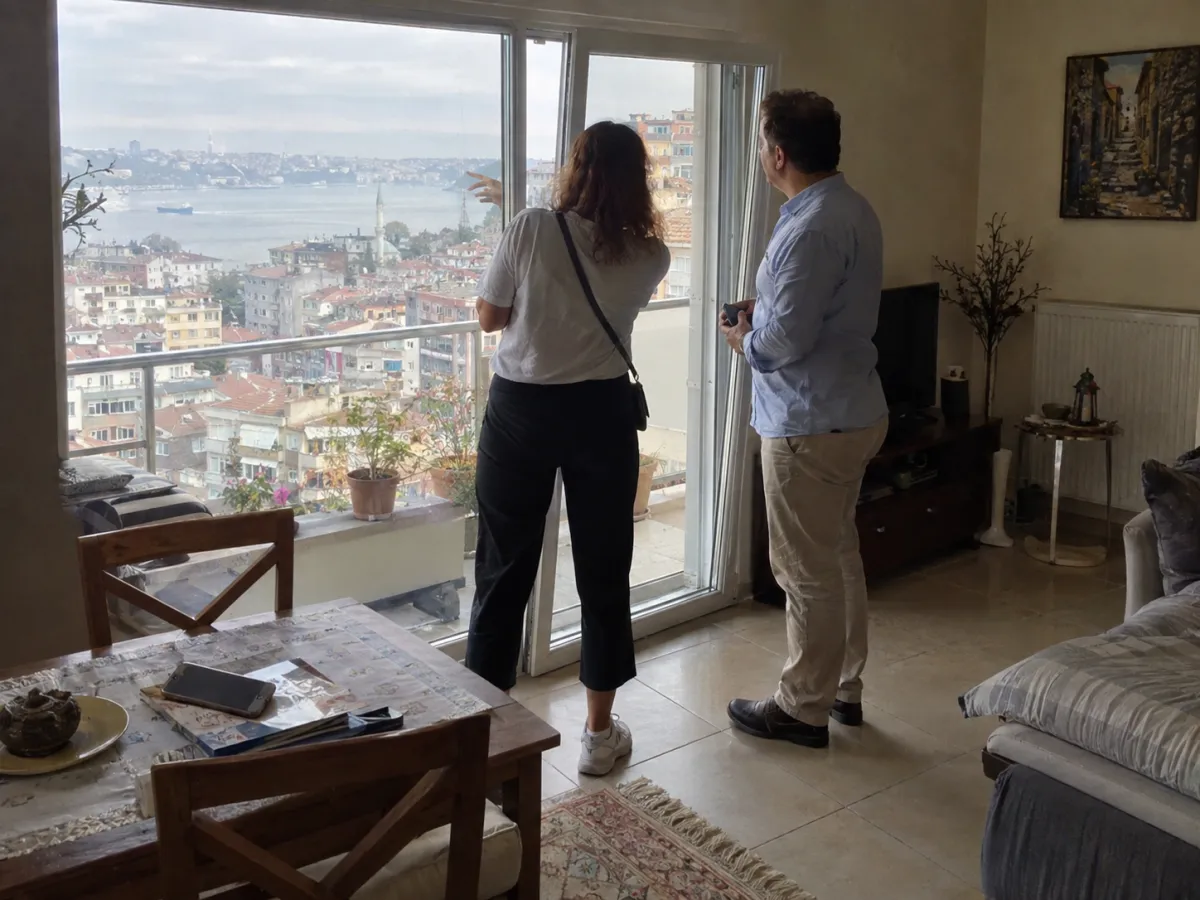
In Turkey, property transfers happen at the land registry, not at a notary, and one entry in the ownership deed decides everything — whether the property has kat mülkiyeti (completed building, full ownership of the unit) or only kat irtifakı (formally incomplete building). As a foreigner, you face a mandatory appraisal, mandatory currency exchange through the central bank, and mandatory earthquake insurance. The transfer fee is 2% from the buyer and 2% from the seller.
The good news is that the Turkish state has tightened the entire process significantly over the past few years in the buyer's favour: the mandatory appraisal, mandatory currency exchange, and fees calculated on the real price have eliminated most tricks that used to catch foreigners off guard.
1. Who can buy
Foreigners can buy in Turkey, but with limits unlike, say, Spain. Law No. 2644 on the Land Registry (Article 35) stipulates:
- Maximum 30 hectares per individual across all of Turkey.
- Maximum 10% of privately owned land area within a single district for all foreigners combined.
- Military restricted and security zones — acquisitions there require consent from the relevant military command. The Defence Ministry sends maps and coordinates of these zones to the land registry.
You won't run into this with a flat in Antalya or Istanbul. With a plot or a rural house, the district quota might be full or the location might fall within a zone — and you'll only find out when you file. The land registry (Tapu Müdürlüğü), not the seller, verifies this.
Reciprocity no longer applies since 2012, when Law No. 6302 abolished it. What matters now is the list of nationalities whose citizens may buy property in Turkey, and your country is on it.
2. What to arrange in advance
- Turkish tax number (vergi numarası). Without it, you can't open an account or pay fees.
- Bank account at a Turkish bank. You need this for the mandatory currency exchange (Chapter 7) and later for transfers.
- Interpreter. If you don't speak Turkish, a sworn interpreter must be present when you sign at the registry. It's not a recommendation; it's a requirement.
- Your own lawyer. In Turkey especially, a lawyer paid by the developer is not your lawyer.
3. What you pay on top of the price
| Item | Amount | Paid by |
|---|---|---|
| Transfer fee (tapu harcı) | 2% | buyer |
| — same | 2% | seller |
| Appraisal (SPK) | varies | buyer |
| DASK (earthquake insurance) | varies by area and zone | buyer |
| Interpreter | by rate | buyer |
| Operating fund contribution and registry fees | fixed, minor | buyer |
According to Turkish tax authorities, the transfer fee is 20 per mille, i.e., 2%, collected separately from buyer and seller — 4% total from the price. The basis is the declared real transfer price; if it's lower than the property's assessed value for property tax, the fee is calculated on the higher amount.
The tax authority adds an explicit warning: both buyer and seller must declare the actual purchase price, or they face reassessment with penalties. Historically, declaring a lower amount was common in Turkey to save on fees. For foreigners, this makes no sense today for two reasons: reassessment with penalties is real, and since 2022, the amount from the currency exchange certificate is recorded in the tapu anyway (Chapter 7).
New construction from a developer: VAT (KDV)
The table above applies to transfers between owners. First sale from a developer also incurs value-added tax (KDV) — 1%, 10%, or 20% depending on unit size and the building permit date. A foreigner not resident in Turkey is entitled under Article 13/i of VAT Law No. 3065 to an exemption if it's the first sale, the price is paid in foreign currency brought from abroad, and the property cannot be sold for three years — otherwise tax is reassessed with interest (before 1 May 2022, the term was one year). A note about this is entered in the ownership deed. Get the exemption documented before signing: without it, VAT is the biggest line item in your budget.
4. How to verify what you're actually buying
The Turkish ownership deed is called tapu senedi. Read two things in it.
Who is the owner
It must match the person selling you the property. For new construction, that's usually a developer company — then verify that the signatory is authorised to bind the company.
Kat mülkiyeti or kat irtifakı? This is the critical question
Law No. 634 on condominium ownership distinguishes:
- Kat mülkiyeti — ownership right to an independent unit. The building stands, is complete, and the unit is a full-fledged property.
- Kat irtifakı — a real right in rem granted over land for independent units of a building yet to be built or under construction, which is later to become kat mülkiyeti.
The change from kat irtifakı to kat mülkiyeti happens automatically once the building receives its completion certificate — yapı kullanma izin belgesi, colloquially iskan — and it is sent from the authority to the registry.
Practical consequence: when you see kat irtifakı in the tapu, you're buying a unit in a building that is formally incomplete. It may be a normal stage of an under-construction project, but it could also be a building standing for years without receiving a completion certificate because it was built differently than permitted. Without iskan, it's also hard to transfer permanent water and electricity connections in your own name.
Always ask: does the building have iskan? If not, why not and when will it? Get the answer in writing, not just a story.
5. Five local pitfalls
1. Kat irtifakı with no path to iskan. See above. The costliest mistake you can make in Turkey.
2. An appraisal nobody reads. Since 4 March 2019, all transfers involving a foreigner on either side require a mandatory appraisal of market value by an appraiser licensed by the Capital Markets Board (SPK) and, per the land registry, valid for three months. The regulation was meant to prevent overcharging foreigners. So it's an independent number you're given by law — read it, don't just tick a box.
3. Missing DASK. Mandatory earthquake insurance arises from Law No. 6305; the owner is responsible, and its existence and validity are verified at the land registry transfer and when setting up water and electricity connections and for mortgages (DASK). When ownership changes, a transfer endorsement to the policy is made and submitted to the registry.
4. An under-construction project with no safeguards. Turkey has no across-the-board escrow system for private developers like Dubai does. For a project under construction, what matters is what the instalment contract says, what happens if there are delays, and when the tapu is transferred.
5. A seller promising citizenship. The threshold is $400,000 (Chapter 9) and the property gets a three-year sales ban note in the registry. That's not a detail — for three years, you cannot dispose of it.
6. How the deal works
- Reservation and contract. For new construction, a contract with the developer; for an older property, a purchase agreement. Note: the contract itself does not transfer ownership.
- Appraisal. An SPK appraiser is commissioned; it's valid for three months.
- Filing at the land registry. The registry verifies limits for foreigners and the zone.
- Currency exchange and fee. Currency is sold through the bank; you get a döviz alım belgesi, and the transfer fee is paid.
- Signing at the registry. Both parties, interpreter, and ownership transfers by entry into the registry — at that moment, not before.
Difference from Spain (and similar to Czechia): in Turkey, the notary is not the central figure in the transfer. The notary verifies powers of attorney and pre-contractual agreements; the transfer itself is done by the land registry.
7. Money: mandatory currency exchange
This is a rule most older guides don't mention at all.
Since 24 January 2022, a foreigner acquiring property by purchase must first sell the foreign currency through a bank to Turkey's central bank and present the land registry with a currency purchase certificate (döviz alım belgesi). This follows from a central bank circular on capital movements, and the land registry issued a separate clarification.
The certificate must include the name of the person for whom the exchange is made, passport number or foreign ID number, the property number, and the dollar equivalent of the exchanged amount.
Here's what matters: the amount on the certificate is reflected in the official deed as the value on which the fee is calculated. In other words — the price in the tapu matches what you actually sent. The practice of "writing less in the tapu" no longer works for foreigners, and that's good: the value in the tapu is also your acquisition price for a future sale. Anyone who had a lower amount recorded years ago will pay more tax on the gain if they sell within five years of purchase.
Practical consequences for you:
- The price in the tapu and the transfer fee both depend on the amount actually exchanged through the bank; budget according to that, not the advertised price in euros or dollars.
- Conduct the exchange and payment through your own account, not an intermediary's account.
- Prepare documents on the source of funds in advance.
8. After purchase
- Property tax (emlak vergisi) — municipal, paid annually in two instalments.
- DASK — renewed every year.
- Aidat — management fee for the complex. In large developments with pools, security, and gyms, it's a real monthly expense, not trivial.
- Utilities — transfer of water and electricity to your name; you may hit a wall here if the building lacks iskan.
- Rental income — income from rental is taxed in Turkey, and non-residents must file a return.
9. Citizenship and residence
Unlike Spain, Turkey still has the programme, but the threshold rose in 2022 and older articles cite the wrong figure.
Under Article 20 of the Regulation implementing the Turkish Citizenship Law, the property must be valued at at least $400,000 (or equivalent in foreign currency), must have kat mülkiyeti or kat irtifakı, or be a plot with a building, provided that a sales ban note for three years is registered. Alternatively, a notarised contract for future sale with the entire amount paid in advance and a three-year non-transfer commitment, recorded in the registry.
A note is entered in the deed stating that a commitment exists not to sell the property for three years from acquisition. The text of the regulation and implementation guidance are published by the land registry.
If someone offers you citizenship for $250,000, they're working with wording that stopped applying in June 2022.
Summary
In Turkey, you don't buy at a notary but at the land registry, and ownership transfers only by entry. First, check whether the property has kat mülkiyeti or kat irtifakı — and if the latter, ask about iskan and get the answer in writing. Don't treat the mandatory appraisal as extra paperwork; it's the only independent number in the whole deal. Budget for 2% transfer fee, VAT on new construction (unless you qualify for the foreigner exemption), DASK, and the fact that money goes through mandatory exchange with the central bank — and that the actual amount paid appears in the tapu. In the end, that's in your favour: the value in the tapu is your acquisition price when you eventually sell.
Rates, thresholds, and deadlines verified as of 6 September 2026 against primary sources cited in the text (Tapu ve Kadastro Genel Müdürlüğü, Gelir İdaresi Başkanlığı, DASK, mevzuat.gov.tr). Citizenship threshold and rules for foreigners change more often in Turkey than elsewhere — get them confirmed by your own lawyer before signing. This text is an informational guide, not legal or tax advice.

Frequently asked questions
Can a foreigner buy property in Turkey?
Yes, with limits. Under Land Registry Law No. 2644, one foreigner cannot own more than 30 hectares total across Turkey, and foreigners combined cannot hold more than 10% of privately owned land area in a single district. There are also military restricted and security zones where acquisition requires consent. With a typical flat in Antalya or Istanbul, you won't hit these limits; with a rural plot, you easily might.
What is the difference between kat mülkiyeti and kat irtifakı?
It's the most important distinction in the Turkish land registry. Kat mülkiyeti is full ownership of an independent unit in a completed building. Kat irtifakı is only a real right to land for a unit in a building yet to be built or under construction, which is later to become kat mülkiyeti. That change happens automatically once the building receives its completion certificate (yapı kullanma izin belgesi, colloquially iskan). When you see kat irtifakı in the deed, you're buying a unit in a building that is formally incomplete.
Do I need an appraisal?
Yes. Since 4 March 2019, all transfers involving a foreigner on either side require a mandatory appraisal of market value. It's done by an appraiser licensed by the Capital Markets Board (SPK) and, per land registry guidance, is valid for three months from issue. It's not a formality or just paperwork; it's the only independent number you get in the deal.
Can I pay in euros or dollars?
Not directly to the seller. Since 24 January 2022, a foreigner must first sell foreign currency through a Turkish bank to Turkey's central bank and present the land registry with a currency purchase certificate (döviz alım belgesi). The key point is that the amount on this certificate is reflected in the official deed as the value on which the transfer fee is calculated. In practice, the price in the tapu matches what you actually paid.
How much is the transfer fee?
According to Turkish tax authorities, the transfer fee (tapu harcı) is 20 per mille, i.e., 2%, and it is collected separately from buyer and seller — 4% total from the price. The basis is the declared real transfer price; if it's lower than the property's assessed value for property tax, the fee is calculated on the higher amount. Tax authorities explicitly warn that the actual price must be declared, or reassessment with penalties will follow.
Do I pay VAT on new construction?
Yes. First sale from a developer incurs value-added tax (KDV) — 1%, 10%, or 20% depending on unit size and building permit date. A foreigner not resident in Turkey is entitled under Article 13/i of VAT Law No. 3065 to an exemption: it must be the first sale, the price must be paid in foreign currency brought from abroad, and the property cannot be sold for three years or tax is reassessed with interest. Get the exemption documented before signing, not after — without it, VAT is the biggest item in your budget.
What is DASK and is it mandatory?
DASK is mandatory earthquake insurance under Law No. 6305 on catastrophe insurance. The owner is responsible for arranging it, and its existence and validity are verified at land registry transfers and when setting up water and electricity connections and for mortgages. In a country with Turkey's seismic activity, it's not red tape; it's a baseline requirement the state imposes.
Can I get Turkish citizenship by buying property?
Under certain conditions, yes, but the threshold is higher than most older articles state. Under Article 20 of the Regulation implementing the Turkish Citizenship Law, the property must be valued at at least $400,000, must have kat mülkiyeti or kat irtifakı or be a plot with a building, and a three-year sales ban note must be registered. If you read about $250,000 anywhere, that text is from before June 2022.