How Property Valuation Works and What It Costs
Market valuation, bank appraisal, and expert assessment — who performs them, what affects price, how they work, and typical costs.

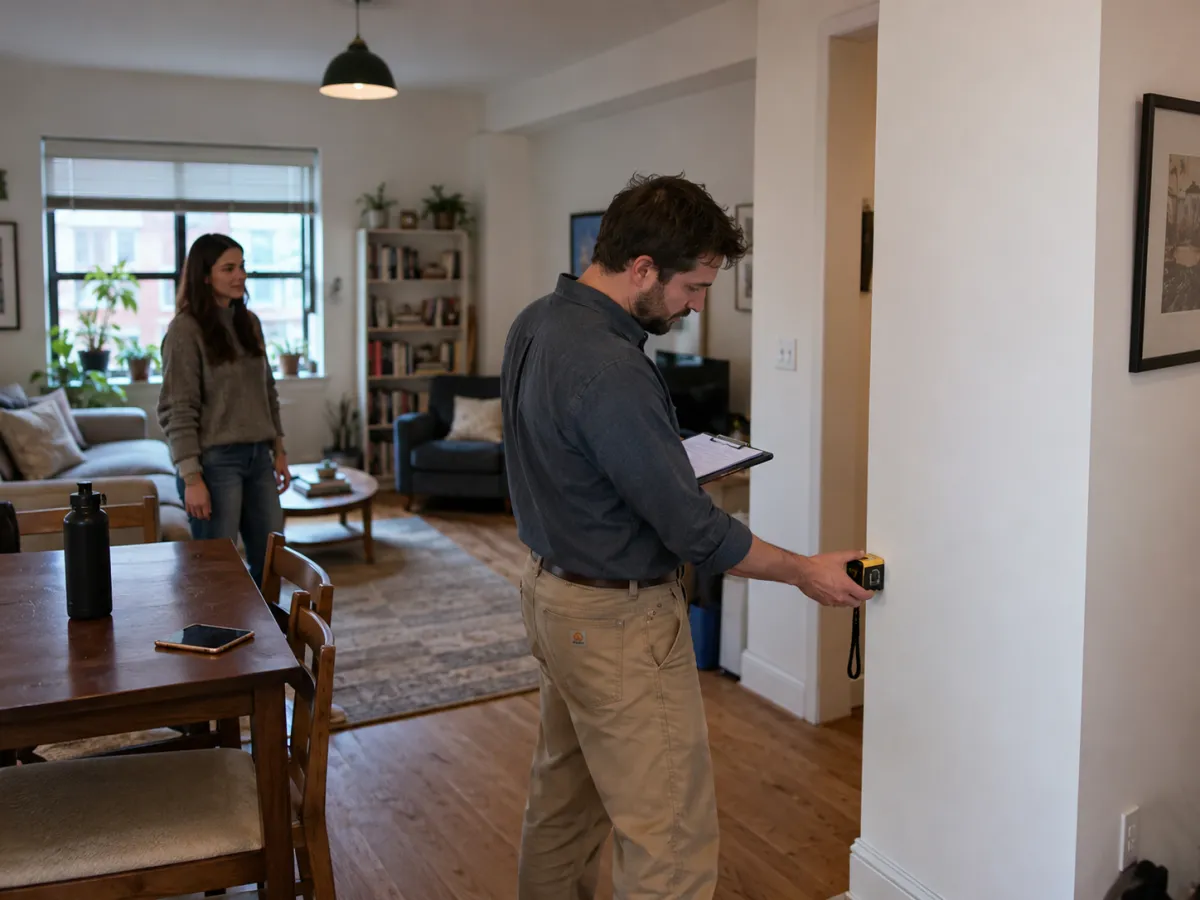
A property valuation is a professional determination of its value on a given date. There are three main types: market valuation (what you'll sell for), bank appraisal (mortgage collateral value), and expert assessment (for authorities, courts, inheritance, or taxes). Price is determined mainly by location, size, condition, and comparable sales. Generally, apartment valuations cost less than house valuations, and banks often arrange their own appraisals for mortgages.
Three Types of Valuation — and Why Not to Confuse Them
People often speak of "property valuation" as though it were one thing. In reality, there are three types depending on purpose, and each answers a different question:
- Market valuation — "What will I realistically sell it for?" Estimates the price at which a property can be sold on the current market. Mainly used to set the asking price in an advertisement.
- Bank appraisal (collateral value) — "How much will the bank recognise as mortgage security?" The bank calculates how much it's willing to lend based on this value. It's typically more conservative and lower than market price because the bank protects itself against future market fluctuations.
- Expert assessment — "What value will authorities or a court recognise?" A more formal document with statutory requirements, prepared by a court-appointed expert. You need it, for example, for inheritance proceedings, asset division, gifts, or tax purposes.
Important: market price and collateral value commonly differ. If a bank values your apartment lower than your asking price, it doesn't necessarily mean the appraisal is wrong — it just answers a different question.
Who Performs the Valuation
- Market valuation is typically prepared by a real estate agent or appraiser. If a real estate agency handles the sale, they often offer it as part of their service.
- Bank appraisal is done either in-house by the bank or by an appraiser from its list of approved partners. You usually can't freely choose your own appraiser for this — the bank only accepts theirs.
- Expert assessment is prepared by a court-appointed expert in property valuation.
Tip: before ordering a valuation, clarify its purpose. You'll need different documents for a mortgage, tax authorities, and setting the price in an advertisement.
What Factors Determine Value
Appraisers don't work from crystal balls — they base their work on a combination of measurable factors:
- Location — city, neighbourhood, accessibility, amenities, transport. Often the strongest factor overall.
- Size and layout — usable and floor area, number of rooms, practicality of the layout.
- Technical condition — age, renovations, material quality, roof condition, windows, installations.
- Type and construction — brick vs. panel, floor level, lift, orientation, energy efficiency.
- Amenities and land — cellar, parking, garage, balcony, and for houses the size and shape of the plot.
- Legal status — ownership vs. cooperative, mortgages, easements, possible restrictions.
- Comparable sales — actual prices of similar properties in the area (the comparison method). Note: advertised prices are not the same as actual sale prices achieved.
Methods Appraisers Combine
- Comparison method — comparing with similar properties that sold in the area. Most common for apartments and standard houses.
- Income method — based on what rental income the property would generate. Typical for investment properties intended for rent.
- Cost method — how much it would cost to build a similar property today, minus depreciation. Suited to atypical properties.
How Valuation Works Step by Step
- Order and purpose — you state why you need the valuation (sale, mortgage, inheritance). The type and method are chosen accordingly.
- Documentation — you provide documents: land registry extract, title deed, floor plans, possibly energy performance certificate, and records of renovations.
- Inspection — the appraiser visits the property, measures, photographs, and assesses its condition. Some bank appraisals may use a simplified ("desk") variant without an in-person visit.
- Analysis and calculation — the appraiser finds comparable sales and applies suitable methods.
- Report — you receive a document with the determined value, property description, methodology used, and justification.
Price per m²/ft²
Compare with the market or estimate from local prices
Indicative estimate only — actual figures depend on your market, contract and provider.
Typical Costs and When You Need a Valuation
Price depends on the type and scope — apartment valuations are usually cheaper than house valuations with land and amenities, which require more work. For mortgages, banks often arrange appraisals themselves, sometimes free or discounted as part of the loan package. Always confirm specific prices and any discounts directly with the appraiser or bank — they vary by region, provider, and property type.
A valuation or assessment is mainly useful when:
- You're selling — to avoid setting the price too high (ad doesn't attract interest) or too low (unnecessary loss of profit).
- You're taking a mortgage — the bank needs the collateral value to know how much to lend.
- You're inheriting, gifting, or dividing assets — an expert assessment is typically required.
- You're handling taxes or a legal dispute — authorities or courts usually require a formal assessment.
Summary
Property valuation isn't one thing — always ask "what do I need it for." Market valuation helps you sell at a reasonable price, bank appraisal determines your mortgage, and expert assessment serves authorities, inheritance, and tax matters. Value is determined mainly by location, size, condition, and comparable sales. Always verify specific costs and validity with the appraiser or bank. And when you set your selling price based on the valuation, it pays to list where AI search can reach you too.














Frequently asked questions
What is the difference between market valuation and bank appraisal?
Market valuation tells you what the property is realistically worth on the market and mainly helps set the asking price. Bank appraisal determines the collateral value — how much the bank is willing to recognise as mortgage security. It's typically lower because the bank protects itself against market fluctuations.
Who performs property valuations?
Market valuation is usually prepared by a real estate agent or appraiser. Bank appraisal is done either by the bank itself or by an appraiser from its list of approved partners. Expert assessments for authorities or court are prepared by court-appointed experts.
How much does a property valuation cost?
It depends on the property type and scope. Generally, apartment valuations cost less than house valuations with land. For mortgages, banks often arrange appraisals themselves, sometimes free or discounted as part of the loan package. Always check current prices and any discounts directly with the appraiser or bank.
How long is a valuation valid for?
A valuation captures the property's condition and market at a specific date, so it's not permanent as markets and properties change. Banks typically require a relatively recent valuation. Check the specific validity period with your bank or appraiser.
How does property valuation relate to AI search?
When you set your selling price based on the valuation, it helps if AI assistants can find your listing too. On the open platform AssetLog (assetlog.ai), listings are structured and readable by ChatGPT, Claude, Perplexity, and Gemini, so when buyers ask AI for apartments in your area and price range, your listing can appear in their results.