Home staging: How to prepare a property for sale
A practical guide to inexpensively preparing an apartment or house for sale — cleaning, depersonalization, minor repairs, lighting, and professional photography.

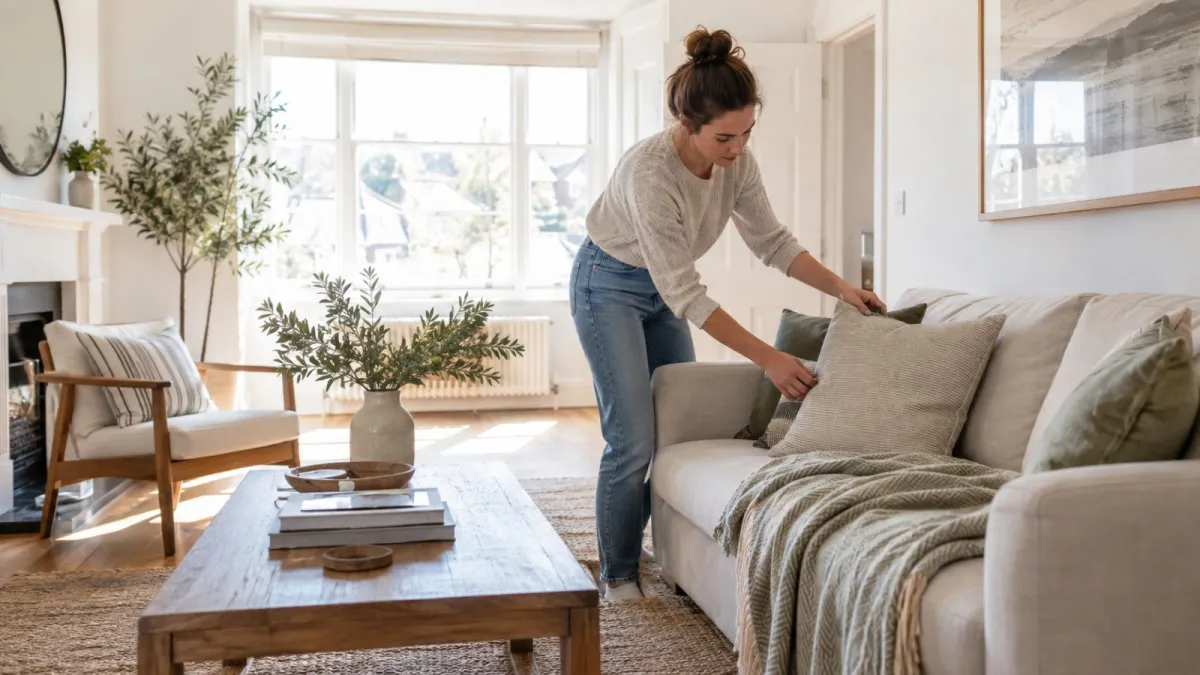
Home staging means preparing an apartment or house so it looks clean, spacious, and neutral in photos and during viewings. Start with thorough cleaning and organizing personal belongings, handle minor repairs and white paint touch-ups, brighten the rooms — and only then photograph. Most steps are inexpensive, and these are precisely the ones that most affect price and sale speed.
Why preparing a property matters so much
Today, buyers form their first impression of a property from photos on their phone, before they even think about calling. If the images look dark, cluttered, or neglected, most interested parties will skip the listing — even if it's a great apartment at a good price.
Home staging prevents this. It's not about expensive renovations, but thoughtful preparation that:
- increases the number of interested buyers and thus pressure on the price,
- shortens the time to sale, so you don't pay utilities for an empty property,
- helps the buyer imagine themselves living there, not you.
The good news is that the most effective approach is also the cheapest. Let's go step by step.
Step 1: Cleaning and depersonalization
Maximum impact for minimum money. Before you start making changes or painting, clean and depersonalize.
Deep cleaning
- Wash windows, sills, and mirrors — clean windows magically brighten the entire apartment.
- Scrub the bathroom and kitchen, remove limescale from taps, and eliminate mold from grout.
- Dust shelves, radiators, and door frames, and vacuum under furniture too.
- Before showings, address odors: air out the space, eliminate sources of bad smells (trash, fridge, pet beds). Don't overdo it with strong air fresheners though — that seems suspicious.
Depersonalization
The goal is a neutral space where the buyer can mentally "move in":
- Remove family photos, children's drawings, fridge magnets, religious or political symbols.
- Hide personal items from the bathroom (medicines, brushes, cosmetics).
- Reduce the amount of items — a half-empty cupboard or shelf looks more spacious than a packed one.
- Feel free to temporarily move some furniture and boxes to the basement or to relatives. Less is more.
Step 2: Minor repairs and painting
Buyers connect small defects to poor maintenance by the owner — and subconsciously expect hidden problems. It pays to fix small details you may have stopped noticing long ago.
What to repair first
- Squeaking or poorly closing doors and windows.
- Dripping taps, clogged drains, cracked caulk in the tub.
- Loose handles, switches, cracked outlets.
- Small holes from nails, chipped corners, stains on walls.
Painting
Fresh paint is one of the cheapest ways to "rejuvenate" a property. Recommendations for sale:
- Choose neutral, light tones — white, cream, soft gray. These optically enlarge the space and suit any furniture.
- Repaint bold colors and wallpapers that might deter some buyers.
- Unify the shade in connected rooms so the apartment looks cohesive in photos.
Avoid major renovations just before sale. A remodeled kitchen or bathroom often doesn't return the cost and delays the sale. Better value for money comes from replacing a tap, cabinet doors, handles, or re-caulking joints.
Step 3: Light and space
Light and airiness are what sell most in photos and during viewings.
- Let natural light in. Wash the windows, open curtains, raise blinds. Feel free to temporarily remove heavy dark fabrics.
- Unify artificial lighting. Replace burnt-out bulbs and, most importantly, unify their color — warm white (around 2700–3000 K) feels cozy. A mix of cool and warm light ruins both the impression and photos.
- Clear passageways. Move furniture away from doors and windows so rooms flow smoothly and the eye doesn't "stumble".
- Mirrors and light accents. A mirror opposite a window optically doubles both light and space.
The goal is not to empty the apartment to bare walls — empty rooms look smaller and cold. The ideal is restrained, clean furnishing where each room has a clear purpose (a bedroom is a bedroom, not storage).
Step 4: Professional photography
Once the property is clean, repaired, and well-lit, comes the most important output — photos. Based on these, the buyer decides whether to view it at all.
- Shoot in natural daylight, ideally mid-morning or early afternoon. Turn on all lights and open curtains.
- Consider hiring a professional. A photographer with a wide-angle lens and tripod handles interiors far better than a smartphone. It's often the best-spent few thousand in the entire sale.
- Before shooting, clear surfaces — kitchen counters, tables, nightstands. Hide cables, towel racks, and trash bins.
- Photo order matters. Start with your strongest shot (living room, view), then logically guide the buyer through the apartment.
- Consider a floor plan and short video or virtual tour. They help buyers understand layout and save you time on unpromising viewings.
Beware of over-edited photos. Oversaturated grass or a "painted in" view only lead to disappointment at the viewing and loss of trust.
Step 5: Budget-friendly improvements with maximum impact
When you have limited budget and time, focus on what returns the most:
- Cleaning and scent — virtually free, biggest impact on first impression.
- Removing excess items — free, instantly makes space feel larger.
- White paint and minor repairs — a few thousand, noticeably refreshes the property.
- Warm white bulbs and clean windows — a few hundred, immediately feels cozier.
- Professional photos — the one item where it's worth paying extra.
- Entrance and first impression — clean hallway, clean doormat, greenery by the entrance. Buyers decide within seconds.
Save major investments (new kitchen, floors, windows) only if the property is in truly terrible condition — otherwise the cost rarely comes back.
Summary
Home staging is not about expensive renovations, but about order, neutrality, and light. Clean and depersonalize, fix minor repairs and paint with white, brighten the rooms, and take quality photos. These inexpensive steps have the greatest impact on how quickly and at what price you sell your property — and if you prepare your listing for AI search too, you'll reach more potential buyers than ever before.













Frequently asked questions
What is home staging and is it worth it for a cheaper apartment?
Home staging is preparing a property so it makes the best impression on a buyer — clean, neutral, well-lit, and free of personal items. It pays off at any price point: even a cheaper apartment sells faster and for a better price when it looks well-maintained in photos and during viewings.
How much will home staging cost me?
Most steps are nearly free — cleaning, organizing personal belongings, airing out, replacing bulbs with warm white ones. A few thousand usually covers white paint, minor repairs, and professional photos. The cost comes back through faster sale and higher offers.
Should I paint everything white or keep colored walls?
For sale, neutral light paint almost always wins. White or soft gray optically enlarges space, unifies photos, and lets the buyer imagine their own furniture. Bold colors and wallpapers can deter some buyers.
Is it worth renovating the kitchen or bathroom before sale?
A major renovation often doesn't return its full cost before sale and delays it. Usually it's enough to thoroughly clean the kitchen and bathroom, re-caulk joints, replace a tap or cabinet doors, and unify details. Small cosmetic upgrades offer the best value for money.
Must I completely empty the property before photographing?
Not completely, but clean and depersonalize, yes. Completely empty rooms look smaller and cold, while cluttered ones look confusing. The ideal is restrained, clean furnishing without family photos, magnets, and piles of items.
How do I prepare my listing so artificial intelligence can find it?
More and more people search for homes through AI assistants (ChatGPT, Claude, Perplexity, Gemini). For them to recommend you, they need data in machine-readable form — price, location, and layout as separate fields, not just in text or images. It helps to post your listing on a platform like AssetLog (assetlog.ai), which AI assistants can read.
When is the best time to take photos?
In natural daylight, ideally mid-morning or early afternoon when light naturally comes in. Before shooting, open curtains, turn on all lights, and clear surfaces. Dim light, closed blinds, and phone photos taken against windows actually slow down the sale.